
The story continues...
By the way,
I'm going to try to post as often as I can. So don't go hate'n if you haven't seen anything in a while. Just chill yo.


“I was this close to showing my artwork at a local gallery. Everything was approved—until I got a phone call that changed everything. They told me my work was ‘too adult’… for the library. So let’s talk about what that really means—for artists, for viewers, and for me.”
A few weeks ago, I submitted five of my favorite pieces to a local library gallery—this is a space that supports artists in the community and gives us a chance to show our work in a public setting. I was excited. Nervous, but excited. I made it through the initial reviews, and things were looking good. I was pretty much approved.
Then, I got the call.
The curator told me that, after further consideration, they decided not to show my work. Why? Because the subject matter was considered “too adult” for some children who might walk by.
Now, I want to be clear—I didn’t submit anything graphic or explicit. But my work does deal with real human experiences. It’s emotional, sometimes uncomfortable, but always honest. And apparently, that was too much.
So that left me with questions:
I’m not mad. But I am curious. And I want to talk about it.
So here’s what I’m doing. I’m sharing the work that got rejected. I’ll walk you through what I submitted and why I made it. You can decide for yourself if it crosses a line—or if maybe we need to rethink where we draw those lines in the first place.
My show was called “Between Us.”
It explores the emotional, psychological, and social space that exists between people—sometimes filled with love or curiosity… and other times, with harm, pressure, or silence.
This is the kind of art that invites conversation.
And apparently, it invited the wrong kind of conversation.
“Education Gap”
This piece shows children perched on stacks of books, reaching out to one another—yearning for connection across an educational divide. It’s about inequity and aspiration. It’s not graphic. Just honest.
“HATE”
Here we see hybrid creatures locked in a chaotic battle—a visual metaphor for both interpersonal violence and inner turmoil. Are they enemies? Or reflections of each other?
“Red Faced”
This one features a crowd of accusing fingers. It’s about the weight of blame, public shaming, and alienation. It’s bold, yes—but we live in a culture full of finger-pointing.
“Chemical Warfare”
This piece explores how scientific achievement can be twisted into instruments of destruction. The gap here isn’t just between people—it’s between nations, ideologies, and the original intent of knowledge.
“Sexual Harassment”
This was likely the piece that sealed the decision. It visualizes the silent, often invisible power dynamics in the workplace—especially the violations that go unspoken. I knew this would be provocative. But that was the point.
The show—“Between Us”—wasn’t created to shock. It was created to reveal. To show the barriers we live with every day, whether they’re made of ignorance, politics, trauma, or silence.
None of these works were pornographic. None were violent in the literal sense. But they were emotionally raw. And that’s what made them vulnerable. And maybe, threatening—but only to ones comfort zones.
What do you think? Should public art avoid hard truths for the sake of younger viewers? Or should we create space for those conversations—even when they’re uncomfortable.
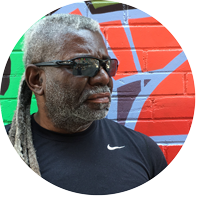 Hello!
Welcome to my site. I draw, I paint, I illustrate and animate. In short, I tell visual stories. I specializes in helping people tell their stories visually. I’ve been telling visual stories for a living for almost four decades, and now, I’d like to share some of what I know about visual storytelling with you. What you’ll see here is a bit of my process, an interesting narrative and a healthy dose of my work. So sit back, engage your mind and feast your eyeballs. Welcome to the DELUGE!
7imp
©2025 DELUGE7imp